
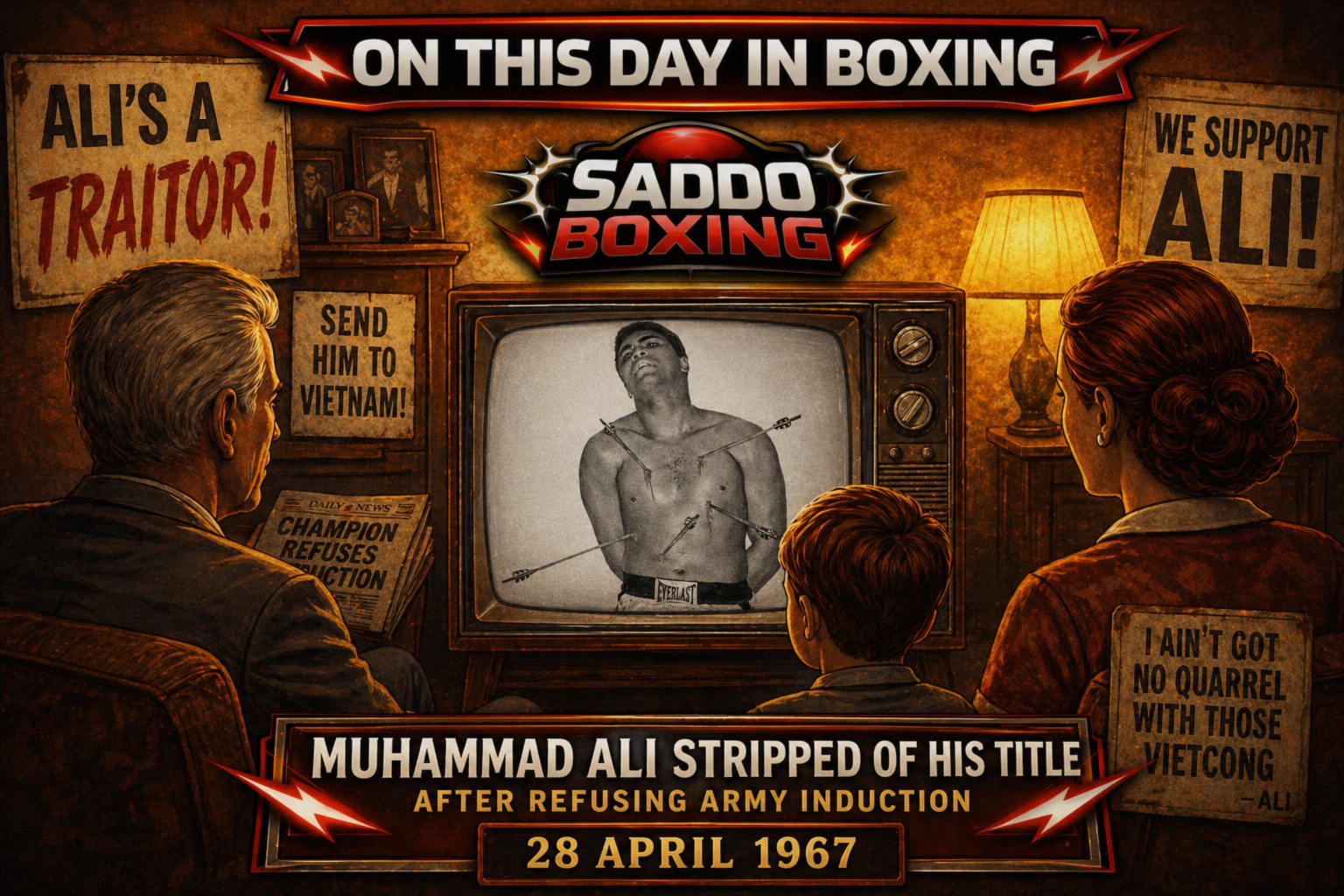
On This Day: Muhammad Ali Stripped of His Title After Refusing Draft (1967)
April 28, 1967 remains one of the most significant and defining moments in boxing history—not for what happened inside the ring, but for a decision made outside of it.
On that day, Muhammad Ali, the reigning heavyweight champion of the world and one of the most recognisable athletes on the planet, refused induction into the United States Army during the Vietnam War.
At just 25 years old and at the peak of his powers, Ali made a stand that would cost him everything he had built in boxing.
The Decision
Ali’s refusal was based on his religious beliefs as a member of the Nation of Islam, as well as his personal opposition to the war. When called forward in Houston to take the symbolic step into military service, he declined.
His stance was clear and unwavering. As he would later explain, he did not believe the war aligned with his beliefs or his conscience.
Within hours, the consequences followed.
Immediate Fallout
Ali was stripped of his heavyweight title, and boxing commissions across the United States moved quickly to suspend his licence. Almost overnight, the most dominant figure in the sport was removed from it.
He was also convicted of draft evasion and faced a five-year prison sentence, though he remained free while appealing the decision.
For the next three years, Ali was unable to fight professionally. These were not just any years—they were the prime of his career.
A Champion Without a Ring
During his enforced absence, the heavyweight division moved on without him. Titles were fought for and won, but there remained a sense that the true champion was no longer competing.
Ali, meanwhile, continued to speak publicly, becoming an increasingly influential figure beyond boxing. His stance divided opinion at the time, drawing both criticism and support in equal measure.
What could not be denied, however, was the scale of what he had sacrificed.
Return and Vindication
Ali returned to the ring in 1970, and in 1971 the United States Supreme Court unanimously overturned his conviction.
What followed in the years after only strengthened his legacy. He would go on to reclaim the heavyweight title and take part in some of the most iconic fights in boxing history.
Legacy
April 28, 1967 is remembered not for a knockout or a title defence, but for a decision that changed the course of a fighter’s life—and the sport itself.
Ali’s refusal cost him his title, his licence, and years of his career. But it also cemented his place as one of the most influential figures the sport has ever seen.
In boxing, fighters are often judged by what they do in the ring. On this day, Ali’s legacy was defined by what he chose to stand for outside of it.
A champion stripped of his title—but not of his conviction.
Leave a comment
Add your comment to the discussion below — it will appear here and on our forum.