
The Mark of a Fundamental Leader – World Boxing Association
This March, the World Boxing Association commemorates the life and work of President Emeritus Gilberto Mendoza, marking the tenth anniversary of his passing on March 11, while also celebrating the anniversary of his birth on March 30.
A central figure in the history of the WBA, Mendoza left an unparalleled legacy at the helm of the organization. He dedicated more than four decades of service in various roles and established both a regulatory and moral framework that continues to guide the institution founded in 1922.
Mendoza was born in Barquisimeto on March 30, 1943. From an early age he practiced baseball and soccer, but it was boxing that ultimately captured his heart and became the defining passion of his life.
A graduate of the Universidad Católica Andrés Bello, Mendoza earned a degree in industrial engineering. He later pursued postgraduate studies in Administration and Organizational Development at the University of Toledo and specialized in Formal Business Planning at the Stanford Research Institute in Palo Alto, California.
As in every stage of his life, Mendoza approached boxing leadership from the ground up. His administrative journey began as treasurer of the Boxing Commission of Aragua state in Venezuela, invited by his friend and fellow boxing leader Alberto Sarmiento.
His return to the sport he loved—after years focused on academic and professional responsibilities—continued with leadership of the Aragua Boxing Association. From there he joined the WBA structure and eventually was appointed Chairman of the Ratings Committee.
In 1982, Mendoza was elected president of the organization, beginning a dynamic and highly productive era for the WBA that lasted until 2015.
Throughout those years, Mendoza balanced his responsibilities within the WBA with an active professional career. He also stood out as a business leader, union organizer, philanthropist, political figure, and contributor to institutions such as the Scouts of Venezuela.
Within the WBA, he authored several regulatory texts that proved revolutionary for the sport at the time, including the World Rankings Manual, the Procedures Manual, the Fight Supervision Manual, and the Half-Point Scoring Manual, designed to prevent uneven scorecards in boxing.
The World Rankings Manual, which later became an industry standard, came to be widely known as the Mendoza Manual.
His influence was also felt during historic moments, such as the WBA’s decision to join the global fight against Apartheid, leading the organization to ban the sanctioning of world title fights in South Africa during the historic 1986 convention in Reno.
Mendoza was also a key architect of the WBA’s global structure. During his tenure, the organization promoted the creation of several regional bodies, including the North American Boxing Association (NABA), the Federación Latinoamericana de Boxeo (FEDELATIN), the Federación de Boxeo del Caribe (FEDECARIBE), the Federación de Boxeo de América Central (FEDECENTRO), the Federación Bolivariana de Boxeo (FEDEBOL), the Pan African Boxing Association (PAFBA) and the European Boxing Association, among others.
He also introduced the designation of Super Champion for fighters who successfully defended their titles five times, as well as the creation of interim championships, among many other initiatives.
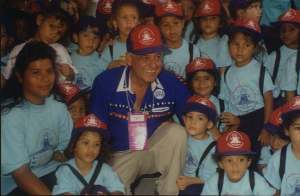
Perhaps one of his most meaningful contributions was the social action program KO Drugs, which combined sport and education as tools to fight drug abuse and promote positive values among young people.
Originally launched in underserved communities in Aragua, Venezuela, the initiative eventually became the flagship social program of the World Boxing Association worldwide and has now reached more than three decades of continuous impact.
Ultimately, Gilberto Mendoza was a leader of great stature—but above all, a man of extraordinary human quality. Solidarity, diplomacy, discipline, and integrity defined his character. A true champion of friendship, he left a lasting mark on the sport and on everyone around him throughout a life rich in values and service to society.
Today, the WBA remembers, celebrates, and expresses gratitude for the enduring moral and inspirational legacy he left behind—summed up in the guiding principle he often shared.