
“To Sir, With Love” — A Farewell to a Master – World Boxing Association
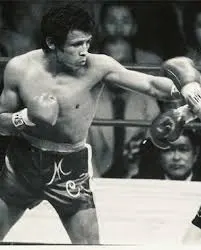
The title of this piece borrows from the 1965 Columbia Pictures film directed by James Clavell and starring Sidney Poitier, the first African American actor to win an Academy Award, honored for Lilies of the Field in 1963. But this reference has nothing to do with cinema. Instead, it serves as a heartfelt tribute to Mexican boxing icon Miguel Canto Solís — known simply as Miguel Canto — affectionately called “El Maestro” and “The Little Master” for his refined technical brilliance.
Canto passed away at the age of 78 on April 16 in his hometown of Mérida, Yucatán. While the exact cause has not been officially determined, medical reports point to a severe chronic neurodegenerative condition that had affected him in recent years.
Canto reigned as WBC flyweight world champion from January 8, 1975, to March 18, 1979. During that stretch, he defended his title 15 times, winning his first 14 defenses before losing the crown by unanimous decision to South Korea’s Chang Hee Park. By then, Canto was 31 years old and had already spent a decade in the professional ranks, having debuted on February 5, 1969, with a third-round stoppage loss to Raúl Hernández — one of just nine defeats in a career that included 61 victories, 15 by knockout, and four draws.
A Brilliant Career
Before diving deeper into his résumé, it’s worth noting that Canto was the first boxer from Yucatán to reach the pinnacle of world championship boxing. To this day, he remains the only fighter from that Mexican state inducted into the International Boxing Hall of Fame in Canastota, New York.
Other Yucatán-born champions include Gustavo “Guty” Espadas, Freddy Castillo, and Lupe Madera — but none matched the technical artistry and global recognition of Canto.
When he first turned pro, few could have imagined the heights he would reach. His early career was rocky: a knockout loss in his debut, followed by another defeat shortly thereafter. But under the guidance of his lifelong trainer Jesús “Cholain” Rivero — a university-trained philosopher who dedicated himself to boxing out of passion — Canto refined his style and corrected key technical flaws.
What emerged was one of the purest embodiments of boxing’s core principle: hit and don’t get hit.
As he rebuilt his career, Canto developed into a master technician, combining footwork, timing, and defensive awareness to neutralize opponents. After a series of wins, draws, and setbacks, he earned his first shot at the WBC flyweight title on August 4, 1973, in Maracaibo, Venezuela, against Betulio González. Fighting in hostile territory, he dropped a hard-fought 15-round decision.
His redemption came on January 8, 1975, in Sendai, Japan, where he defeated Shoji Oguma in a grueling battle to claim the world title. From there, Canto embarked on a dominant championship run, avenging past defeats and taking on all challengers across the globe.
He successfully defended his title against a who’s who of the flyweight division, including Betulio González, Jiro Takada, Ignacio Espinal, Susumu Hanagata, Orlando Javierto, Luis Reyes Arnal, Kimio Furesawa, Martín Vargas, and Oguma in a rematch, among others. His reign was defined not by knockout power, but by surgical precision and ring intelligence.
Canto finally lost his title to Chang Hee Park in South Korea in 1979 and later fought to a draw in their rematch. After a few more bouts, including wins and eventual losses as wear and tear took their toll, he retired in 1982 — closing the book on a remarkable career.
One of the Greatest Flyweights Ever
Canto is universally regarded by boxing historians as one of the ten greatest flyweights of all time. That elite list is often topped by Welsh legend Jimmy Wilde, “The Mighty Atom,” who dominated the division in the early 20th century.
Alongside Canto and Wilde are names like Masao Ohba, Pone Kingpetch, Peter Kane, Benny Lynch, Pascual Pérez, Frankie Genaro, Pancho Villa, Midget Wolgast, Fidel La Barba, and Betulio González — a collection of fighters who defined excellence at 112 pounds.
Miguel Canto may not have been a knockout artist, but he was something rarer: a master craftsman inside the ring.
Rest in peace, Champion. Rest in peace, Maestro.
Leave a comment
Be the first to leave a comment below — it will appear here and on our forum.