
“Cocolo†Takes His Leave—Without Asking His Friends for Permission – World Boxing Association
There are pieces of news that hurt. That tear at the soul. They rip away a fragment of your personal history and return memories you thought were long asleep. In boxing terms, they are knockout blows—the kind we never want to hear, never want to happen, and therefore never want to write about.
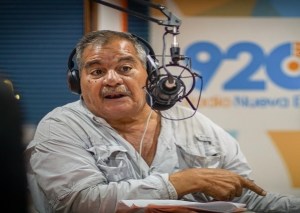
The passing of Alfredo “Cocolo†Arismendi hurts. Deeply.
Life’s road, long and thorny, always brings companions along the way. Some stay forever; others walk with you through decisive stretches that leave a permanent mark. That was my case with Cocolo—whom I always called “CocolÃa.†We shared the early days of journalism and later reconnected as adults with the same affection, the same closeness, and the same spirit we had at the beginning.
Journalism and boxing bound CocolÃa and me together. He carried boxing in his veins. He breathed it. He sweated it.
His father, Santos Arismendi, was one of the judges on that historic night in Caracas when Carlos “Morocho†Hernández became Venezuela’s first boxing world champion—an episode Cocolo, curiously enough, rarely mentioned.
His college classmates remember him as cheerful, mischievous, full of life. In school, he embraced journalism with the same passion he brought to living. From Caracas he went to Margarita, and from Margarita to study journalism at the Central University of Venezuela.
Extroverted, sharp-tongued, and strong-willed, Cocolo was, in truth, a man with a heart of gold. His furrowed brow never reflected his kindness or his true nature. His smile was never just a laugh—it was always a full-bodied roar. Modest yet resolute, he was a first-rate reporter. Just ask the colleagues who shared newsrooms with him at Meridiano and El Nacional, back when those papers were staffed by heavyweights.
I shared Cocolo’s return to Caracas. Our careers ran in parallel lanes: I was a reporter for El Mundo, he for Meridiano. I still remember sports executive Jesús Chirinos once saying, “These two kids together are dynamite.†He said it during coverage of the Military Boxing World Championships at Fuerte Tiuna, after Cocolo—faced with a controversial decision involving a Venezuelan fighter—ran the headline: “Military Revolt at Fuerte Tiuna.â€
The next day, upon returning to the base, he was taken into a small room, asked a few questions, and calmly set straight. Later he told me:
—Damn, I went too far, and the colonel made that clear.
They were different times then—times of tolerance and understanding.
On another occasion, we drove to La Guaira to watch the Lebrón Brothers fight. As we entered one of the tunnels, a truck slammed into my old student-era Mercedes-Benz.
—Was it bad, CocolÃa? I asked, still in shock.
—I don’t think so… it just ripped the door off.
And like that imperfect, trivial story, there were many others—right up to recent times in Margarita.
His Time at the WBA
For a long stretch, Cocolo headed the WBA’s press operations. He was recruited in Turmero by the organization’s current president, Gilberto Jesús Mendoza, who once told me Cocolo drank more coffee than a bakery coffee machine.
In that role, he left his mark. Tireless, persistent, relentless—always in his own way, on his own terms. He traveled to the United States, worked alongside Mendoza Sr., and we shared conventions together. We covered fight nights, but more than anything, we shared laughter—especially that thunderous laugh that defined him.
After having “killed the league†in Caracas, Cocolo returned to Margarita, where today the sense of loss is profound. On the island, everyone loved him—even those who disagreed with him. It was impossible for him to go unnoticed, and just as impossible for him not to help the community from his platform, La Hora del Gallo.
Cocolo didn’t sleep. By three in the morning he was already on his feet, traveling from La Guardia to Porlamar, going live at exactly five a.m. with a radio show that commanded massive ratings on the island. It’s hard to imagine a phenomenon like that being repeated in modern journalism.
I can testify that Morel RodrÃguez was his first listener every morning. One day, walking at dawn with the then-governor of Nueva Esparta along La Caracola, RodrÃguez suddenly removed his headphones, irritated, pulled out his phone, and called the station:
—What’s going on? Why hasn’t Cocolo’s show started?
—They changed the schedule. It starts at seven now, they replied.
—They mess with my stuff and put Cocolo back at five.
I had to pass along the story. The laughter echoed all the way to Thailand.
—Man, Jairo, thank God you heard that. I told them the storm that was coming and let them deal with it…
Today, I don’t write with ease. My fingers are tense, my eyes are wet, my heart is broken, and my emotions sit right at the surface. It isn’t fair that you left without your friends’ permission.
A good man is gone. A plain, simple, eloquent man. A fine journalist. A great human being.
A piece of what we lived is gone, in this constant coming and going of life and journalism. Poet Alberto Cortez was right: when a friend leaves, the space cannot be filled by the arrival of another.
It hurts.