
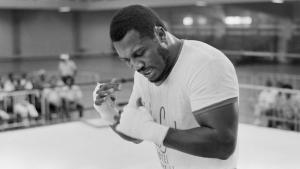
In Memory of “Smokin’†Frazier – World Boxing Association
On January 12, the boxing world marks the 82nd anniversary of the birth of Joseph William Frazier, forever known simply as Joe Frazier, born in Beaufort, South Carolina. Nicknamed “Smokin’,†Frazier stands as one of the toughest, most electrifying and relentlessly proud heavyweight champions ever to lace up the gloves. An aggressive and unforgiving battle with liver cancer, diagnosed just two months earlier, finally forced him to lower his guard for the last time on November 7, fourteen years ago, in Philadelphia.
The nickname Smokin’ was no whimsical invention of American boxing writers. It was a vivid reflection of what set the immortal fighter apart. At the first clang of the bell, Frazier would explode toward center ring like a hungry panther, his upper body in constant motion, snorting as if smoke were pouring from his nostrils — resembling an old steam locomotive or a boiler-driven ship — all while stalking behind his most lethal weapon: a devastating left hook, widely regarded as one of the most murderous punches in boxing history. His right hand, though often overshadowed, was no less dangerous.
Frazier will forever be remembered by longtime fans, particularly for his three historic clashes with Muhammad Ali, born Cassius Clay — a fighter many still regard as the greatest of all time.
Filling the Void
To be fair, however, Joe Frazier represented far more to boxing than merely being Ali’s fiercest rival. Frazier rose to prominence at a time when the sport desperately needed a new standard-bearer. Ali’s refusal to be drafted into the Vietnam War removed the sport’s undisputed box-office magnet from action for three and a half years, leaving heavyweight boxing dangerously adrift.
During Ali’s exile, it was Frazier who helped keep the sport alive, sustaining public interest in a heavyweight division mired in mediocrity — a cyclical condition boxing knows all too well. The fans were hungry for a star, and while Frazier lacked Ali’s charisma, he delivered credibility, grit and championship substance when it was needed most.
Following Frazier’s death, media outlets revisited his trilogy with Ali, which ultimately ended 2–1 in Ali’s favor. Chief among them was the legendary “Fight of the Century†on March 8, 1971, at Madison Square Garden, contested for the WBA, WBC and The Ring titles. Both men entered unbeaten — Frazier at 26–0 (24 KOs), Ali at 31–0 (25 KOs). A decisive knockdown of Ali in the 15th round, courtesy of Frazier’s left hook, proved pivotal in delivering Smokin’ Joe the unanimous decision.
The rematch, less heavily promoted, gave Ali his revenge. But history has lingered most intensely on the epic third encounter, the Thrilla in Manila on October 1, 1975.
Never before — nor since — has the heavyweight division witnessed a bout of such raw violence and emotional drama. Legend has it, perhaps with a touch of myth, that when Frazier failed to answer the bell for the 14th round — later insisting trainer Eddie Futch forced the stoppage and “gave the fight away†— Ali collapsed into the arms of his corner, Angelo Dundee and his assistants forming a human shield to hide the moment from the referee and crowd. Ali reportedly whispered to ringside reporters, “I’ve never been so close to death.â€
Years later, Ali would confirm that no opponent among the 56 men he faced was tougher or more punishing than Joe Frazier. It is equally accepted that neither fighter was ever quite the same physically after their brutal war in Manila.
Frazier’s post-ring life ended humbly in Philadelphia after squandering much of the fortune he earned with his fists — at least $6 million from his three fights with Ali alone. In his career, he was defeated only by two men — Ali and George Foreman, each twice. Foreman stopped him in two rounds in Kingston, Jamaica (January 22, 1973), and again in five rounds in New York on June 15, 1976.
An Olympic gold medalist at Tokyo 1964, Frazier fought professionally from 1965 to 1976, with a brief and unsuccessful comeback five years later that ended in a draw with Floyd Cummings, after which he retired for good.
He reigned as heavyweight champion under the WBA, WBC and The Ring banners, capturing the crown by stopping Jimmy Ellis in five rounds on February 16, 1970. His title defenses included victories over Bob Foster (TKO 2), Ali, Terry Daniels (TKO 4) and Ron Stander (TKO 5) before falling to Foreman.
Frazier finished his career with a record of 32 wins (27 KOs), 4 losses (3 by KO) and 1 draw in 56 bouts, defeating notable contenders such as Jerry Quarry, Oscar “Ringo†Bonavena, Buster Mathis, George Chuvalo, Jimmy Ellis and Doug Jones.
Some writers likened his relentless aggression to Rocky Marciano, while others drew technical comparisons — perhaps generously — to Joe Louis and Archie Moore. What is beyond debate is that Joe Frazier’s credentials earned him rightful induction into both the International Boxing Hall of Fame and the World Boxing Hall of Fame.
These lines serve as a respectful tribute to his memory and professional legacy — not as lyrical praise, but as recognition duly earned.
Finally, warm wishes of Merry Christmas and a prosperous 2026 to the readers of the official website of the World Boxing Association, the sport’s pioneering sanctioning body.